
Best OLED Gaming Monitors
As an Amazon Associate, I earn from qualifying purchases. Some links may earn us a commission at no extra cost to you.
OLED gaming monitors combine near-perfect black levels with extremely fast pixel response, making dark scenes look more convincing and fast movement appear cleaner than it does on most conventional LCD displays. They are particularly effective for HDR games, competitive shooters, racing titles, and cinematic single-player experiences. Refresh rate remains one of the biggest differences between current models, but it should not be considered alone. Resolution, screen size, panel coating, aspect ratio, connectivity, OLED maintenance features, and warranty coverage all affect long-term value. A 480Hz 1440p display is ideal for esports, while a 4K 240Hz model usually provides a better balance for mixed gaming.
Top Picks
1. LG UltraGear G8 32GX850A — Best Value 32-Inch 4K OLED
The LG UltraGear G8 32GX850A delivers the core 32-inch 4K OLED experience at a noticeably lower price than the flagship dual-mode models. Its OLED panel runs 4K at up to 165Hz, with a Dual Mode option that drops to 1080p at up to 330Hz when maximum frame rate matters more than resolution.
With a 0.03ms response time, NVIDIA G-SYNC compatibility, and AMD FreeSync Premium Pro, it covers both cinematic and fast-paced gaming well. The 165Hz ceiling at 4K is lower than the 240Hz flagships, but for most gamers and most GPUs it is a distinction that rarely shows up in practice.
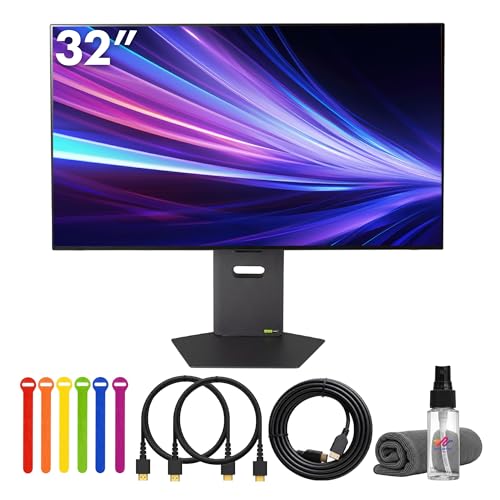
- Bundle Items Include: LG UltraGear G8 32" Dual Mode 4K 165 Hz / FHD 330 Hz Gaming Monitor, HDMI Cable, Cable Ties, LCD Screen Cleaning Kit
- Dual Mode technology lets you switch between immersive UHD 4K at 165 Hz for cinematic gameplay and ultra-fast Full HD at 330 Hz for competitive matches. The 32" OLED panel delivers a 0.03 ms response time, minimizing motion blur and ghosting so fast action appears smooth, responsive, and precise during intense gaming sessions.
- Experience vibrant visuals with factory-calibrated OLED color supporting 1.07 billion colors and 98.5% DCI-P3 coverage. VESA DisplayHDR True Black 400 and a 1.5 million:1 contrast ratio produce deep blacks and bright highlights, while Micro Lens Array+ technology boosts brightness for vivid, lifelike scenes.
Pros
- 32-inch 4K OLED at a more accessible price
- Dual Mode adds a 1080p high-refresh option up to 330Hz
- 0.03ms response with G-SYNC and FreeSync Premium Pro
- HDMI and DisplayPort connectivity for PCs and consoles
Cons
- 4K refresh tops out at 165Hz rather than 240Hz
- Running modern games at 4K still requires a powerful GPU
Who should buy it: Gamers who want a large 4K OLED for single-player games, multiplayer, and consoles without paying flagship dual-mode prices.
Scores: Performance 4.7/5 · Refresh Rate 4.4/5 · Connectivity 4.6/5 · Value 4.8/5
2. LG UltraGear 32GS95UE-B — Best Dual-Mode OLED Gaming Monitor
The LG UltraGear 32GS95UE-B is built for gamers who regularly switch between visually demanding games and high-speed competitive titles. Its Dual Mode system runs at 4K and up to 240Hz for detailed gaming, or at 1080p and up to 480Hz when maximum frame rate matters more than resolution.
This flexibility makes it more versatile than a conventional 4K OLED, especially for players who enjoy both story-driven releases and esports. The 32-inch screen is immersive at 4K, although the 1080p mode looks noticeably softer at this size and is best reserved for competitive sessions.
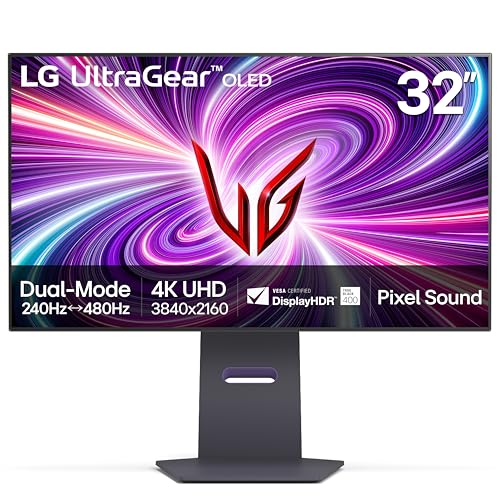
- 4K/UHD UltraGear OLED @ 240Hz - 4K UHD at up to 240Hz on an OLED display is the best of all gaming worlds - smooth, ultra-fast OLED gaming with immersive, breathtaking visuals.
- Dual Mode - LG UltraGear OLED introduces the World’s First VESA Certified Dual Mode gaming monitor, offering 4K up to 240Hz or Full HD up to 480Hz.
- 0.03ms Response Time - Enjoy smoother scenes with less lag or ghosting thanks to LG UltraGear OLED's nearly instantaneous 0.03ms (GtG) response time.
Pros
- Switches between 4K at 240Hz and 1080p at 480Hz
- Excellent choice for mixed competitive and cinematic gaming
- Fast OLED response and strong motion clarity
- Large 32-inch screen creates an immersive image
Cons
- 1080p looks relatively soft on a 32-inch panel
- Costs more than simpler 4K 240Hz OLED monitors
Who should buy it: PC gamers who want 4K image quality for most games but also want access to a 480Hz mode for competitive shooters.
Scores: Performance 4.9/5 · Refresh Rate 5/5 · Connectivity 4.6/5 · Value 4.1/5
3. ViewSonic VX2738-2K-OLED — Best Affordable OLED for Competitive Gaming
The ViewSonic VX2738-2K-OLED makes OLED-grade motion clarity genuinely affordable. Its 27-inch 1440p OLED panel runs at 240Hz with a 0.03ms response time, which is fast enough for the vast majority of competitive players, at a price far below premium 360Hz and 480Hz esports monitors.
FreeSync Premium keeps frame delivery smooth, and the QHD resolution is easy for mid-range and high-end GPUs to drive at consistently high frame rates. As covered in the FAQ below, 240Hz OLED already provides excellent motion clarity — the step up to 480Hz mainly benefits players with top-tier hardware.

- Immersive Quad HD QD-OLED: Elevate your setup with a 27-inch 2K (2560x1440p) display that leverages Quantum Dot OLED technology; enjoy infinite contrast, vibrant 10-bit color volume, and the deepest blacks for a cinematic gaming experience that standard LED monitors cannot replicate.
- Blistering 240Hz Refresh: Stay ahead of the competition with an ultra-fluid 240Hz refresh rate and a near-instant 0.03ms (GtG) response time; this combination eliminates motion blur and ghosting, ensuring every frame is rendered with razor-sharp precision during fast-paced action.
- Tear-Free Precision: Outplay your opponents without the distraction of screen tearing or stuttering, thanks to dual compatibility with NVIDIA G-Sync and AMD FreeSync Premium, providing a seamless, lag-free experience across any high-performance GPU.

Pros
- 240Hz OLED motion clarity at an accessible price
- 0.03ms response time for clean fast movement
- 1440p is easy to drive at high frame rates
- FreeSync Premium and ergonomic stand adjustments
Cons
- No 360Hz or 480Hz option for elite esports players
- Offers less detail than a native 4K monitor
Who should buy it: Competitive FPS players who want OLED speed and contrast at high frame rates without paying for a premium 480Hz esports display.
Scores: Performance 4.6/5 · Refresh Rate 4.5/5 · Connectivity 4.4/5 · Value 4.9/5
4. INNOCN 2780S 27-Inch QD-OLED — Best Value 1440p OLED
The INNOCN 2780S provides a 27-inch 1440p QD-OLED panel with a refresh rate of up to 280Hz. It occupies a useful middle ground between mainstream 240Hz OLED monitors and considerably more expensive 360Hz or 480Hz esports models.
Its QHD resolution is well matched to the screen size and places less demand on the graphics card than 4K. HDMI 2.1, adaptive-sync support, and an adjustable stand improve its versatility, although INNOCN has a shorter track record in premium gaming displays than MSI, LG, ASUS, or Samsung.

- Experience Ultimate Gaming Visual Clarity: This 27-inch QD-OLED gaming monitor delivers stunning 1440p resolution with perfect blacks and vibrant colors, immersing you in every detail of your PC gaming world. Compatible with PS5, XBOX, Switch Console, Gaming PC, Gaming laptops
- Dominate with Blur-Free 280Hz Speed: Gain the competitive edge with a blistering 280Hz refresh rate and near-instantaneous 0.03ms response time. Enjoy flawlessly smooth motion and crisp visuals for fast-paced action.
- Next-Gen QD-OLED Visual Fidelity: Witness breathtaking contrast and rich colors powered by QD-OLED technology. Enjoy immersive PC gaming and HDR content with deep blacks and incredible highlight detail.
Pros
- 280Hz QD-OLED panel at a practical 1440p resolution
- Strong balance between image quality and GPU requirements
- HDMI 2.1 and adaptive-sync support
- Potentially better value than established premium brands
Cons
- Smaller review history than the leading alternatives
- Warranty and long-term support are less established
Who should buy it: Value-focused PC gamers who want 1440p OLED contrast and a refresh rate above 240Hz without moving to a premium 480Hz model.
Scores: Performance 4.5/5 · Refresh Rate 4.7/5 · Connectivity 4.5/5 · Value 4.8/5
5. Samsung Odyssey OLED G9 — Best Super-Ultrawide OLED
The Samsung Odyssey OLED G9 takes the ultrawide concept to its logical extreme: a curved 49-inch OLED panel at 5120-by-1440 Dual QHD resolution — effectively two 27-inch 1440p monitors fused into a single seamless 32:9 display — running at up to 240Hz.
For simulation, racing, strategy, and immersive single-player games with proper 32:9 support, nothing on this list matches its field of view, and it doubles as an exceptional productivity display. This listing also bundles a five-year protection plan, which is meaningful reassurance on a large OLED panel.
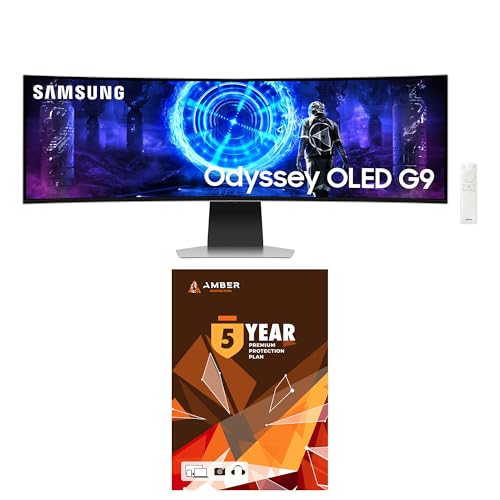
- OLED in Dual QHD: Content springs to life on the Dual QHD (5120 x 1440) resolution screen, providing unparalleled clarity and precision | 0.03ms Response Time (GtG) & 240Hz Refresh Rate: Dodge, counter, and engage faster than the rest
- OLED Glare Free: With a screen 54% less glossy than Samsung's conventional Anti-Reflection film, you can see your full game environments and get the drop on enemies | G-Sync Compatible: Fast-action and complex game scenes are stable and stutterfree
- Gaming Hub: Experience the games you already love, discover new favorites, and explore what's trending, all in one place | Design: CoreSync and Core Lighting+ enhance the immersive experience
Pros
- Massive 49-inch 32:9 Dual QHD OLED panel
- 240Hz refresh with fast OLED response
- Replaces a dual-monitor setup for work and play
- Bundled five-year protection plan
Cons
- Many games do not support the 32:9 aspect ratio correctly
- Requires substantial desk space and GPU power
Who should buy it: Gamers and multitaskers who want the widest possible OLED field of view and the security of long-term protection coverage.
Scores: Performance 4.8/5 · Refresh Rate 4.6/5 · Connectivity 4.6/5 · Value 4.3/5
Quick Comparison
- Best value 32-inch 4K OLED: LG UltraGear G8 32GX850A
- Best dual-mode monitor: LG UltraGear 32GS95UE-B
- Best affordable competitive OLED: ViewSonic VX2738-2K-OLED
- Best value 1440p OLED: INNOCN 2780S
- Best super-ultrawide: Samsung Odyssey OLED G9
Buying Guide
Choose the Right Resolution and Size
A 27-inch 1440p monitor is a practical choice for competitive gaming because it is easier for the GPU to drive at high frame rates. A 32-inch 4K monitor provides greater detail and immersion for mixed gaming, while a 34-inch ultrawide expands the horizontal field of view in supported games.
Match Refresh Rate to Your Hardware
A 240Hz monitor is already fast enough for most gamers. Moving to 280Hz or 480Hz makes the most sense for competitive players whose computers can consistently generate very high frame rates. A higher refresh rate offers little benefit when the game is running far below it.
Check Console Connectivity
Console players should look for HDMI 2.1, variable refresh rate support, and the ability to accept a 4K 120Hz signal. Ultrawide monitors are less suitable for consoles because most consoles output a standard 16:9 image rather than native 21:9.
Consider OLED Care and Warranty Coverage
Pixel shifting, static-image detection, logo dimming, panel refresh cycles, and heat-management systems can reduce burn-in risk. Warranty terms vary by brand and region, so confirm whether the exact model and seller include burn-in coverage.
FAQs
Is OLED Better Than IPS for Gaming?
OLED generally provides deeper blacks, stronger contrast, faster pixel response, and cleaner motion. IPS monitors can still be better for brightly lit rooms, lower prices, and work involving static content for many hours every day.
Is 240Hz Enough for Competitive Gaming?
Yes. A 240Hz OLED monitor provides excellent motion clarity for most players. A 480Hz model offers an additional improvement, but it requires both a high-end PC and games that can run at several hundred frames per second.
Is Burn-In Still a Risk?
Yes, although modern OLED monitors include several protection systems that reduce the likelihood of permanent image retention. Avoid leaving the same bright interface elements on screen continuously, allow maintenance cycles to complete, and use automatic screen sleep settings.
Is QD-OLED or WOLED Better?
QD-OLED usually offers strong color volume and a glossy, vivid presentation, while WOLED models may handle bright ambient light differently and are available in specialized dual-mode designs. Neither technology is automatically better for every room or use case.
Should Console Gamers Buy an Ultrawide OLED?
Usually not as a first choice. Most consoles output 16:9 video, which can result in black bars on a 21:9 monitor. A 27- or 32-inch 4K OLED with HDMI 2.1 is generally more suitable for PlayStation and Xbox gaming.
Final Verdict
The LG UltraGear G8 32GX850A is the strongest value for most gamers, combining a 32-inch 4K OLED image with a high-refresh 1080p mode at a price well below the flagship dual-mode models. The LG 32GS95UE-B is the better choice for players who will regularly use both 4K 240Hz and 1080p 480Hz modes. Competitive players should consider the ViewSonic VX2738-2K-OLED for 240Hz OLED speed at a standout price, while the INNOCN 2780S offers a higher 280Hz refresh for 1440p QD-OLED gaming. For maximum immersion, the Samsung Odyssey OLED G9 stands alone in the super-ultrawide class.
As an Amazon Associate, I earn from qualifying purchases.