
Best glue for leather (repairs + leathercraft)
As an Amazon Associate, I earn from qualifying purchases. Some links may earn us a commission at no extra cost to you.
Leather adhesives are designed for different jobs. Contact cement suits layered leathercraft and structural bonds, flexible repair glues work well for bags and upholstery, while dedicated shoe adhesives are aimed at materials that flex repeatedly.
These seven picks cover leathercraft, footwear, furniture, precision repairs, and larger workshop projects.
Top 7 Picks
1. RH Adhesives Duall-88 — Flexible Contact Cement for Leather Assemblies
Duall-88 is a contact adhesive positioned for leatherwork, upholstery, footwear, and mixed-material repairs. The original listing highlights a flexible bond and compatibility with materials including leather, EVA foam, rubber, and metal.
Its contact-cement workflow makes it particularly relevant when joining larger leather surfaces where the pieces can be positioned before the adhesive-coated faces are pressed together.
Why consider it:
It is a purpose-built contact adhesive for leather assemblies that need to remain flexible.
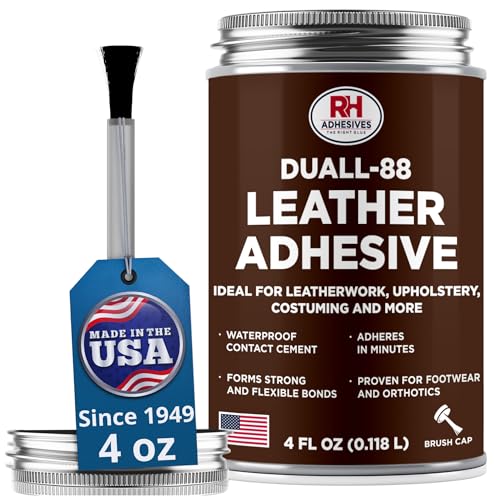
- Specialized Leather Adhesive - Our Duall-88 formula is one of the strongest adhesives available to...
- Dries Clear - When using it to repair or manufacture leather goods such as shoes or handbags, it...
- Versatile Adhesive - In addition to leather, it also works to bond EVA foam, metals, crepe rubber...
Pros
- Designed specifically for leather bonding
- Flexible-bond positioning
- Works with several mixed materials
- Dries clear according to the original listing
- Suited to leathercraft and repair work
Cons
- Contact cement allows little repositioning after surfaces meet
- Application requires more preparation than simple squeeze-tube glue
Trade-offs / Who should skip:
Choose a precision-tip repair adhesive if you are fixing a small tear rather than laminating or joining larger surfaces.
2. Stnkeno Leather Glue — Clear Flexible Repair Adhesive
Stnkeno is a 2.1-ounce leather adhesive aimed at shoes, bags, jackets, seats, and other finished leather goods. Its original listing emphasizes a strong flexible bond, clear drying, and a precision nozzle with an anti-clog cap.
The tube format makes it easier to apply to smaller repairs than brush-on contact cement.
Why consider it:
Its clear-drying flexible format is convenient for targeted repairs on finished leather items.

- Extra Strong Leather Glue - Our leather repair adhesive is formulated with a high strength bonding...
- Strong & Flexible Bonding - Our leather adhesive delivers unmatched bonding strength, maintaining...
- Anti-Clog Cap & Precision Nozzle - Say goodbye to messy, clogged nozzles! Our leather adhesive...
Pros
- Clear-drying positioning
- Flexible bond
- Precision nozzle
- Anti-clog cap
- Suitable for multiple leather goods
Cons
- Small tube is less practical for large projects
- Not the same workflow as traditional contact cement
Trade-offs / Who should skip:
For large leather panels or repeated workshop use, a can or larger bottle of cement makes more sense.
3. Meuvcol Leather Glue 100g — Precision Repair with Multiple Tips
The Meuvcol leather adhesive is supplied in a 100-gram format and is positioned for leather, faux leather, vinyl, rubber, handbags, upholstery, car seats, and shoes. The campaign listing describes it as fast drying, clear, and waterproof and includes six precision tips.
Those included tips give it a distinct role for small seams, narrow edges, and localized repair work.
Why consider it:
Six precision tips make it well suited to controlled application around small leather repairs.
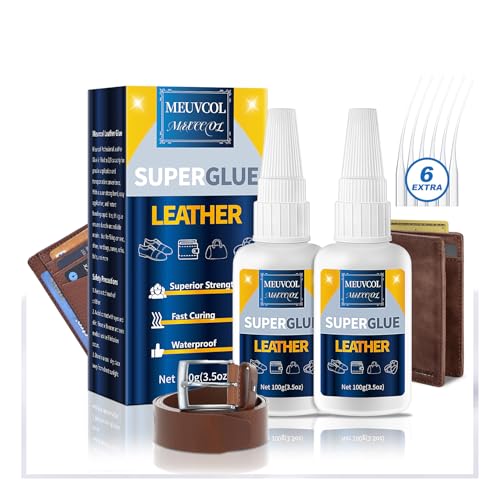
- MADE FOR LEATHER REPAIR: This leather glue is designed for repairing and bonding leather items that...
- FAST-SETTING STRONG BOND: The formula sets in about 3 to 5 minutes and helps create a strong hold...
- CLEAR-DRYING REPAIR FINISH: Dries clear for a cleaner repair appearance while helping restore...
Pros
- 100-gram format
- Six precision tips
- Clear-drying positioning
- Listed for leather and faux leather
- Also positioned for vinyl and rubber
Cons
- Precision-tube format is less convenient for coating large surfaces
- Marketing strength claims do not replace proper surface preparation
Trade-offs / Who should skip:
Choose a brush-on contact cement when you need to spread adhesive evenly across broad leather surfaces.
4. Wonshine Contact Cement — Brush-On Neoprene Cement
Wonshine uses a 2.11-ounce can with an integrated application brush. The original listing identifies it as a neoprene contact adhesive with flexible bonding for materials including leather, wood, and upholstery.
Its small can makes it practical for occasional leathercraft jobs where an even coat matters more than precision-tip application.
Why consider it:
The built-in brush simplifies spreading contact cement across leather edges and panels.
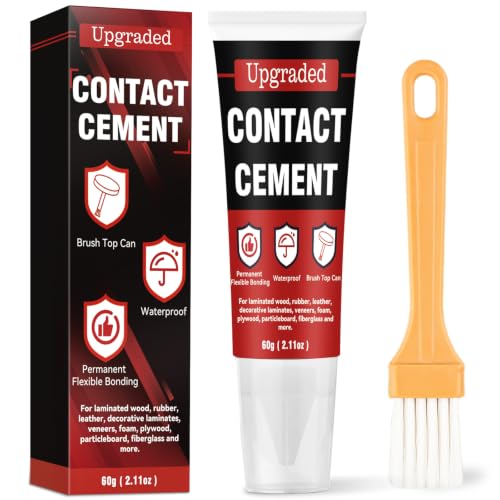
- High-Performance Contact Cement: Our contact cement effectively bonds various materials and...
- Strong And Flexible Bonding: Our contact cement adhesive combines exceptional bonding strength with...
- Includes Precision Brush: Our contact cement glue comes with a convenient application brush for...
Pros
- Brush applicator included
- Neoprene contact-adhesive format
- Flexible-bond positioning
- Suitable for leather and mixed materials
- Compact workshop size
Cons
- Small can is not intended for high-volume work
- Joined surfaces cannot easily be repositioned
Trade-offs / Who should skip:
A squeeze-tube adhesive is easier for tiny repairs, while the Fiebing’s bottle is more appropriate for larger quantities of leathercraft work.
5. Fiebing’s Leathercraft Cement 32 oz — Large-Bottle Workshop Cement
Fiebing’s Leathercraft Cement comes in a 32-ounce bottle and is explicitly listed as a leathercraft cement. That larger format distinguishes it from the small tubes and compact cans elsewhere in this roundup.
It is a more natural fit for people working on repeated leathercraft projects where buying adhesive in small repair tubes would be inconvenient.
Why consider it:
The 32-ounce bottle is suited to higher-volume leathercraft use.
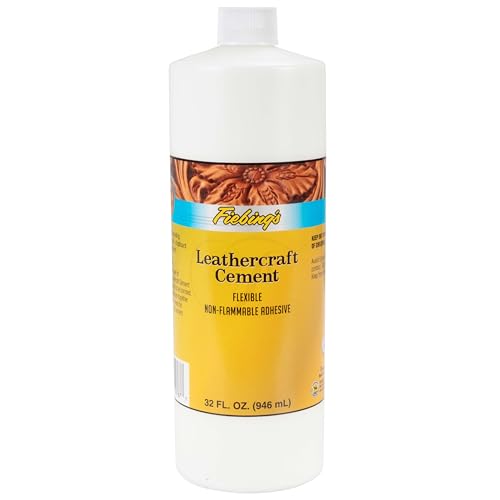
- EASY TO USE: Fiebing's Leathercraft Cement is an easy to use, quick drying leather glue to bond...
- VERSATILE: Water-based contact adhesive can be used for a variety of DIY crafts and on leather items...
- STRONG GLUE: Super high strength, permanent bonding with long lasting results.
Pros
- 32-ounce bottle
- Specifically listed as leathercraft cement
- Larger quantity for repeated projects
- Suitable for workshop use
- Reduces reliance on multiple small tubes
Cons
- Large bottle is unnecessary for occasional repairs
- Supplied campaign listing provides limited detail about application characteristics
Trade-offs / Who should skip:
Choose Stnkeno or Meuvcol if you only need enough adhesive for occasional small household repairs.
6. Shoe Sole Glue 50ml — Footwear and Boot Repair Adhesive
This 50ml shoe adhesive is specifically positioned for footwear repairs involving leather, rubber, and canvas. The supplied campaign listing describes it as waterproof and fast drying and identifies sports shoes, sneakers, boots, and casual footwear as intended uses.
It replaces the removed Eagle Shoe Cement while preserving a dedicated footwear-repair option in the lineup.
Why consider it:
Its listing is specifically centered on flexible shoe and sole repair rather than general leathercraft.
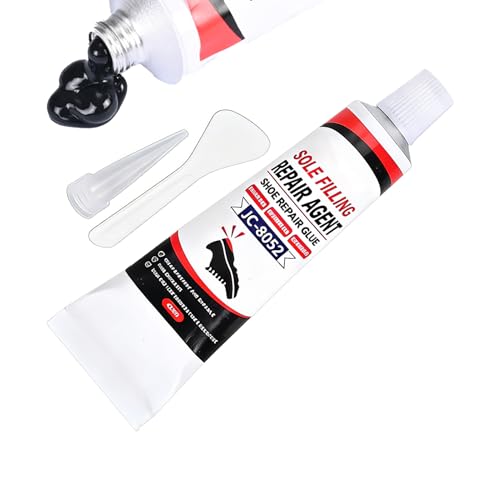
- Long-lasting Crack Repair: Shoe Glue adheres securely to damaged surfaces, repairing cracks and worn...
- Quick Curing Capability: This Shoe Glue Sole Repair provides rapid curing action in just half an...
- Natural Color Matching: Shoe sole glue provides a close match to common sole colors, creating a...
Pros
- Specifically positioned for shoe repairs
- Listed for leather
- Listed for rubber and canvas
- 50ml repair format
- Waterproof positioning
Cons
- Supplied listing has very limited user-feedback depth
- Less appropriate for broad leathercraft laminations
Trade-offs / Who should skip:
Choose Duall-88 or Wonshine for general leathercraft and layered assemblies rather than footwear-specific repairs.
7. Tandy Eco-Flo Leather Weld — Water-Based Leathercraft Adhesive
Eco-Flo Leather Weld is a 4-ounce water-based adhesive designed around leathercraft projects such as bags and belts. Its original listing emphasizes a flexible bond, clear drying, and a squeeze-bottle application format.
It provides a different workflow from solvent-style contact cements and dedicated shoe adhesives.
Why consider it:
Its water-based format offers a straightforward option for general leathercraft projects.
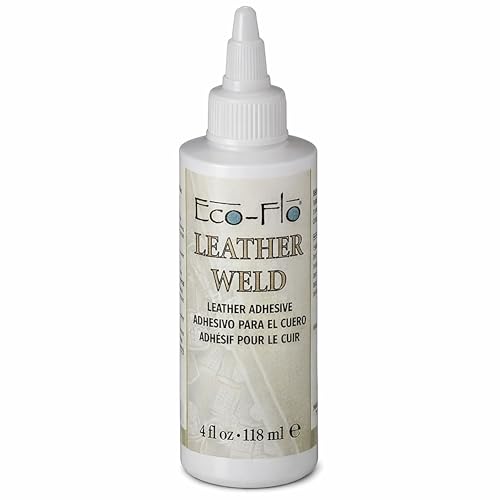
- STRONG AND FLEXIBLE BOND - This advanced water-based adhesive creates a durable yet bendable hold...
- DRIES CLEAR FOR CLEAN FINISH - The transparent drying formula in this project glue keeps seams...
- EASY PRECISION APPLICATION - Smooth spread consistency and a squeeze bottle tip in this leather glue...
Pros
- Water-based formulation
- Clear-drying positioning
- Flexible bond
- Squeeze-bottle application
- Designed for leathercraft projects
Cons
- Not positioned specifically for heavy footwear repairs
- Less suited to jobs that specifically call for contact cement
Trade-offs / Who should skip:
Use a contact cement for structural leather assemblies or a dedicated footwear adhesive for peeling soles and similar repairs.
Quick Compare
- Flexible contact cement: RH Adhesives Duall-88
- Small clear repair tube: Stnkeno Leather Glue
- Precision-tip repairs: Meuvcol Leather Glue
- Brush-on contact cement: Wonshine Contact Cement
- Large-volume leathercraft use: Fiebing’s Leathercraft Cement
- Footwear and sole repairs: Shoe Sole Glue 50ml
- Water-based leathercraft: Tandy Eco-Flo Leather Weld
Final Verdict
The main difference between these adhesives is how they are applied and what kind of repair they target. Duall-88 and Wonshine use contact-cement-style workflows for leather assemblies, while Stnkeno and Meuvcol are easier to apply to smaller localized repairs.
Fiebing’s provides a much larger quantity for repeated leathercraft work, the 50ml Shoe Sole Glue keeps a dedicated footwear option in the roundup, and Eco-Flo Leather Weld provides a water-based approach for general craft projects.
Match the adhesive to the size of the repair, the materials being joined, and whether the finished item needs to flex repeatedly.
As an Amazon Associate, I earn from qualifying purchases.