
Best Baby Formula: Safe, Simple Picks (and How to Prep Correctly)
As an Amazon Associate, I earn from qualifying purchases. Some links may earn us a commission at no extra cost to you.
Choosing a formula is mostly about tolerance + the right formula type (standard vs. sensitive vs. hypoallergenic). In the U.S., FDA requirements mean infant formulas must meet baseline nutrition standards, so the “best” one is usually the one your baby digests well and you can reliably find.
Top picks
Enfamil NeuroPro Infant (Powder) — Best for a “start-here” standard formula
A widely used standard, milk-based option with DHA + added components often highlighted for early development support. Why it wins: it’s an easy baseline to try before moving to “gentle/sensitive” or specialty formulas.
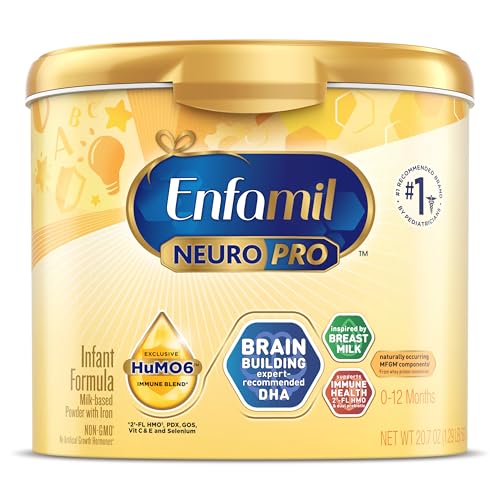
- OUR BRAIN BUILDING DUO: Enfamil NeuroPro infant formula has MFGM components and expert-recommended DHA also found in breast milk. Shown to support brain development in baby’s first year
- SUPPORT THEIR GROWING BRAIN: Fostering their brain development with confidence. Enfamil ready to feed and powder options are available for your convenience
- 5-YEAR BRAIN BENEFIT: Enfamil NeuroPro has MFGM components clinically shown to support cognitive, motor & communication development now through age 5 when fed through baby's first year
Pros
-
Standard intact milk protein (good baseline for many babies)
-
Broad availability across sizes/forms on Amazon
-
Clear brand documentation and long market history
Cons
-
If gas/fussiness persists, you may need a “gentle” option
-
Some babies do better on reduced-lactose formulas
Social proof: See reviews on Amazon.
Trade-offs / Who should skip: If you suspect a milk-protein allergy (not just mild gas), skip standard formulas and talk to your pediatrician about hypoallergenic options.
Scores: Performance 4/5 | Protein format 4/5 | Ease of use 5/5 | Value 4/5
Similac 360 Total Care (Powder) — Best for parents who want 5 HMOs
Similac 360 Total Care is positioned around a 5-HMO prebiotic blend (a big differentiator vs. many standard formulas). Why it wins: if you’re choosing between two standard formulas, this is one of the clearer “feature” upgrades.
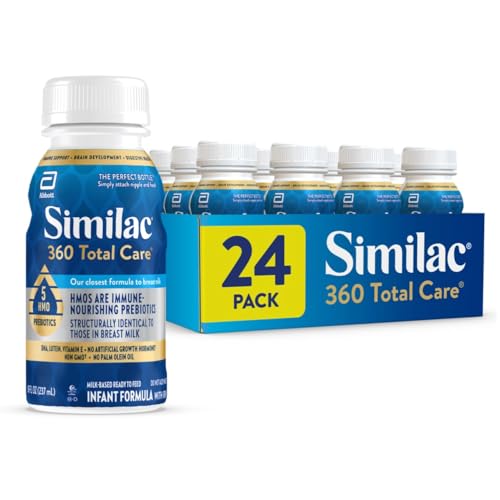
- HAS OUR CLOSEST PREBIOTIC BLEND TO THAT IN BREAST MILK: Similac 360 Total Care, our biggest formula breakthrough, has an exclusive blend of 5 HMO prebiotics structurally identical to those in breast milk
- 360 WHOLE-BABY SUPPORT: Nutrition designed to help support the immune system, brain development, and digestive health
- DESIGNED TO HELP STRENGTHEN THE IMMUNE SYSTEM: Similac 360 Total Care is designed to help strengthen baby’s immune system

Pros
-
5-HMO blend called out by the manufacturer
-
Standard milk-based, iron-fortified profile
-
Multiple formats (powder/RTF) depending on the listing
Cons
-
If lactose sensitivity is a true issue, you may need a “sensitive” line
-
HMOs aren’t a guarantee of better tolerance
Social proof: See reviews on Amazon.
Trade-offs / Who should skip: If your baby needs extensively hydrolyzed protein, this isn’t the right category.
Scores: Performance 4/5 | Protein format 4/5 | Ease of use 4/5 | Value 4/5
Bobbie Organic Infant Formula (Powder) — Best for a clean-label, lactose-first organic pick
Bobbie’s “Original” leans into USDA Organic positioning and a lactose-first carb approach. Why it wins: it’s a straightforward organic choice if you want fewer “workaround” carbs (like corn-syrup solids) in the ingredient strategy.

- INFANT FORMULA MODELED AFTER BREAST MILK: Bobbie formula is a complete nutrition recipe with industry leading levels of DHA and iron, choline, and vitamin D to support healthy growth and development.
- CLEAN INGREDIENT ORGANIC FORMULA: Crafted with organic, nutrient dense grass fed milk and NO corn syrup, sucrose, maltodextrin, palm oil, or soy allergens
- USDA ORGANIC AND CLEAN LABEL CERTIFIED: This powdered infant formula is USDA + EU Organic as well as Clean Label Project Certified.
Pros
-
Organic positioning + brand transparency around ingredients
-
Lactose as the highlighted primary carb source
-
Clean Label Project certification is publicly referenced by the brand
Cons
-
Not designed for milk-protein allergy needs
-
If you need “gentle” (partially hydrolyzed), pick that version instead
Social proof: See reviews on Amazon.
Trade-offs / Who should skip: If your baby clearly does better on partially hydrolyzed or hypoallergenic protein, start there instead of trying to force a standard formula to work.
Scores: Performance 4/5 | Protein format 4/5 | Ease of use 4/5 | Value 3.5/5
Earth’s Best Organic Sensitivity (Powder) — Best for mild lactose sensitivity in an organic formula
This is an organic reduced-lactose milk-based formula (still not hypoallergenic). Why it wins: it’s a reasonable next step if a standard formula seems to cause mild gassiness and you want an organic option before switching protein formats.

- Nutrition First: Made with organic* milk from grass and grain-fed cows (!), our Sensitivity Infant Formula with Iron has lutein, prebiotics, and DHA and ARA to give your baby nutrients that support the body’s defenses, brain, and eye development
- Belly Friendly: The reduced lactose formula was developed to help little ones who experience fussiness, gas, or crying due to upset tummies. This easy-to-digest (1) formula meets FDA requirements for infant nutrition****
- Made for Ages and Stages: Sensitivity Infant Formula is great for supplementing breastfeeding or as a replacement to nourish your baby for the first year until they are ready to transition to whole milk or a milk alternative
Pros
-
Reduced lactose formula approach (per brand)
-
USDA Organic positioning and added DHA/ARA highlighted
-
Brand notes Clean Label Project Purity Award status
Cons
-
Reduced lactose ≠ solution for milk-protein allergy
-
Some babies still do best on standard lactose-first formulas
Social proof: See reviews on Amazon.
Trade-offs / Who should skip: If symptoms look severe (blood in stool, poor weight gain, ongoing vomiting), don’t “trial-and-error” this category—get medical guidance.
Scores: Performance 3.5/5 | Protein format 4/5 | Ease of use 4/5 | Value 3.5/5
Enfamil Nutramigen with Probiotic LGG (Powder) — Best hypoallergenic option (extensively hydrolyzed)
Nutramigen is a hypoallergenic, extensively hydrolyzed formula (different category than “sensitive”). Why it wins: it’s one of the clearest “step-up” options when a pediatrician recommends hydrolyzed protein for suspected cow’s milk protein allergy.

- HELPS TO EASE COLIC: Delivers Clinically-Proven Relief when managing colic due to cow’s milk allergy for a happier, better-rested baby & mom.Amino acid-based
- FAST RELIEF NOW: As early as the first feeding, with 90% of infants improving within 48 hours
- INCLUDES LGG: The most extensively studied probiotic for allergy management and supporting the digestive health of your baby
Pros
-
Extensively hydrolyzed protein + LGG probiotic (per manufacturer)
-
Designed specifically for allergy-management use cases
-
Clear medical-positioning documentation
Cons
-
Taste/smell can be harder for some babies
-
Overkill for simple gas—use when medically appropriate
Social proof: See reviews on Amazon.
Trade-offs / Who should skip: If your baby is thriving on a standard formula, there’s usually no reason to jump to hypoallergenic. Use this category with pediatric guidance.
Scores: Performance 4/5 | Protein format 5/5 | Ease of use 3.5/5 | Value 3/5
Quick compare
-
Start-here standard: Enfamil NeuroPro Infant — baseline intact protein.
-
HMO-focused standard: Similac 360 Total Care — 5 HMOs called out by brand.
-
Organic + lactose-first: Bobbie Organic — clean-label positioning.
-
Organic + reduced lactose: Earth’s Best Sensitivity — for mild lactose sensitivity.
-
Hypoallergenic: Nutramigen — extensively hydrolyzed protein.
FAQs
Is one baby formula “healthier” than another?
If a formula is legally sold as infant formula in the U.S., it must meet FDA nutrient requirements (minimums for required nutrients and safety controls). Differences are usually about tolerance and ingredient strategy (protein format, lactose level, HMOs/prebiotics).
How do I safely make powdered formula?
Follow the can instructions and good hygiene (clean hands, clean prep surface). For higher-risk infants (very young, premature, or immunocompromised), FDA notes an extra-precaution option using water heated to at least 70°C/158°F before mixing, then cooling before feeding.
When should I consider a hypoallergenic formula?
If there’s concern for cow’s milk protein allergy or a medical reason to change categories, that’s when extensively hydrolyzed formulas like Nutramigen come up. It’s not a typical first move for mild gas alone.
Can I switch formulas whenever I want?
Many parents can switch, but frequent changes can make it hard to tell what’s helping. If symptoms are severe or persistent, it’s safer to involve a pediatrician rather than trialing multiple categories quickly.
As an Amazon Associate, I earn from qualifying purchases.