
Best Baby Cereal for Starting Solids: 5 Parent-Friendly Picks
As an Amazon Associate I earn from qualifying purchases. Some links may earn us a commission at no extra cost to you.
For most babies, the “best” cereal is the one that’s iron-fortified, easy to mix to the right texture, and made from a grain that fits your family (oat/multi-grain vs. wheat-free options). I usually start with oatmeal, then rotate grains as baby does well with new textures.
Top picks
Earth’s Best Organic Whole Grain Oatmeal Infant Cereal — Best overall (simple ingredient list)
A classic oatmeal cereal with a short ingredient list and clear “first cereal” positioning.
Why it wins: simple formula + widely available + iron-fortified.
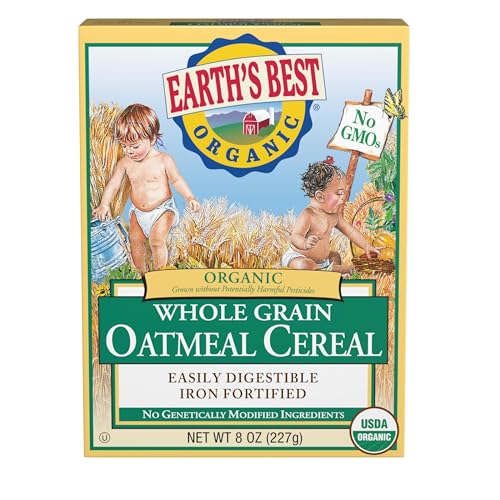
- INFANT NUTRITION: This organic whole grain cereal is fortified with iron to offer nutritional support as your baby transitions to eating solid foods
- WHOLESOME INGREDIENTS: Made with a simple blend of ingredients, like organic whole grain oat flour, for a gentle cereal that helps support your little one's growth
- FIRST SOLID FOOD: When your baby is ready for solid foods, introduce this whole-grain oatmeal cereal by mixing with formula, breast milk, water, until desired consistency is reached
Pros
-
Short, “first food” style ingredient list
-
Iron-fortified for early solids
-
Mixes thin → thick easily as baby progresses
Cons
-
May not work for strict wheat/gluten avoidance
-
No flavor variety (it’s plain oats)
Social proof: See reviews on Amazon.
Trade-offs / who should skip: If you need a clearly wheat-free/gluten-free labeled cereal, skip this and choose a certified alternative.
Scores: Performance 4/5 • Ingredient simplicity 5/5 • Ease of use 5/5 • Value 4/5
Gerber Organic Single Grain Oatmeal Cereal — Best for widest availability (organic + extra nutrients)
A widely stocked organic oatmeal cereal that’s easy to find and easy to use.
Why it wins: easy to source + strong “starter cereal” format + lots of added vitamins/minerals.

- ORGANIC BABY ESSENTIALS: Gerber Organic Baby Oatmeal Cereal is thoughtfully crafted for parents who want to provide their little ones with nutritious, high-quality food. With its quick and easy-to-mix design, this organic baby cereal offers a practical solution for busy parents seeking both quality and convenience
- NUTRITIOUS: This organic baby food has 14 grams of whole grains per serving, 60% of the daily value of iron, 30% of the daily value of zinc, 25% of the daily value of vitamin B12
- STAGE 1 BABY FOOD: Introduce baby to their first bite of solid foods with Gerber Baby Cereal. Our organic baby oatmeal cereal is a stage 1 baby food. Stage 1 baby foods are designed for babies who are able to sit with help or support
Pros
-
Organic option with broad distribution
-
Heavier fortification than minimalist cereals
-
Clear guidance for starting solids on-pack/brand messaging
Cons
-
Longer ingredient list than minimalist picks
-
May not work for strict wheat/gluten avoidance
Social proof: See reviews on Amazon.
Trade-offs / who should skip: If you want the shortest ingredient list, pick a more minimalist oatmeal instead.
Scores: Performance 4/5 • Ingredient simplicity 3/5 • Ease of use 5/5 • Value 4/5
Happy Baby Organics Clearly Crafted Oatmeal — Best minimalist organic (few ingredients)
A simple organic oatmeal option when you want a “keep it basic” label.
Why it wins: minimal ingredients + easy starter texture.

- Clearly Crafted Cereal: Made with organic oats, Vitamin C & iron that helps support baby's brain development, the silky-smooth texture of this organic, whole grain Cereal is ideal for babies exploring taste & texture Bonus: it comes in a resealable pack!
- Organic Whole Grain Cereal: Happy Baby's Whole Grain Oats & Quinoa and Whole Grain Oatmeal Clearly Crafted Cereals are designed with simple, organic ingredients like whole grain oats and quinoa with 45% DV of iron to help support baby's brain development
- Happy Baby: We provide organic, delicious options for your baby's nutritional journey; Happy Baby offers baby food pouches, organic cereals, teething wafers, baby snacks and more made for your little one
Pros
-
Minimal ingredient approach for a first cereal
-
Easy to keep plain or mix into purees
-
Smooth, predictable “everyday” oatmeal base
Cons
-
Less “extra” fortification than some classic brands
-
Oat-only (no grain variety)
Social proof: See reviews on Amazon.
Trade-offs / who should skip: If you want multi-grain variety early, skip and choose a multigrain cereal once baby tolerates oats.
Scores: Performance 4/5 • Ingredient simplicity 5/5 • Ease of use 5/5 • Value 4/5
Earth’s Best Organic Multigrain Cereal — Best for rotating grains (step-up cereal)
A practical next step after single-grain oats, especially if you want more grain variety.
Why it wins: grain rotation + still easy “cereal” texture.
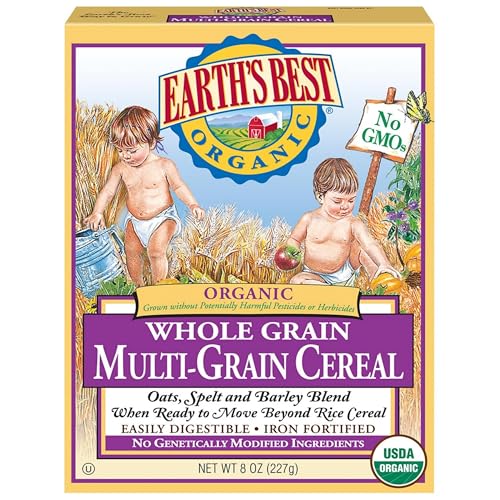
- USDA ORGANIC CERTIFIED – A trusted option for your happy, healthy baby.
- WHOLESOME INGREDIENTS - Made from Whole Grains and non-GMO ingredients from our family of organic farmers and certified Kosher.
- IRON FORTIFIED FOR INFANT GROWTH & DEVELOPMENT - Easily Digestible for babies ready to move beyond rice cereal.
Pros
-
Grain variety for rotation after oats go well
-
Iron-fortified
-
Helps keep meals from being “oats every day”
Cons
-
Not ideal for wheat avoidance
-
Can feel “heavier” than single-grain oats for some babies
Social proof: See reviews on Amazon.
Trade-offs / who should skip: If baby is very new to solids or gets gassy with multi-grain, stick to single-grain a bit longer.
Scores: Performance 4/5 • Ingredient simplicity 4/5 • Ease of use 5/5 • Value 4/5
Else Baby Super Cereal (6+ months) — Best non-oat alternative (different base)
A standout option if you want something outside the usual oat/wheat pattern and baby is 6+ months.
Why it wins: different base + clearly positioned for older infants.
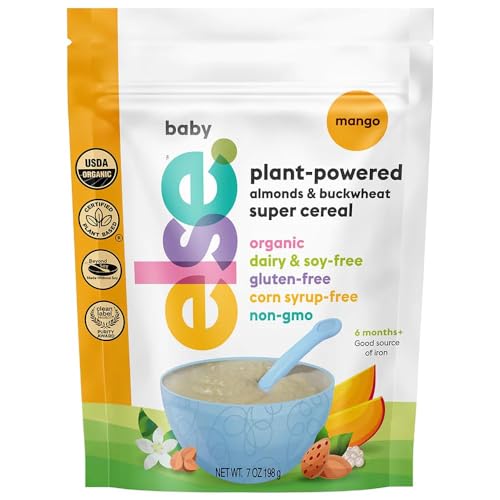
- The First Solid Food for your baby: Else Super Cereal is your baby's first step into the world of solid foods. Designed for babies 6 months and older, our organic cereal provides a nutritious and gentle introduction to complementary feeding, making it the perfect stage 1 baby cereal.
- Clean Label Certified: Keep it clean! We get it, it’s a struggle to find healthy, nutritionally dense options for your baby, without having to worry about high levels of heavy metals, plastic and pesticides. That’s why we’re cleaning up baby nutrition with the 1st US baby cereal awarded the Clean Label Project Purity Award – giving you complete peace of mind. Rigorously tested for over 400 contaminants and toxins, Else Baby Cereal has been certified free of heavy metals, pesticides, and industrial contaminants like BPA, ensuring unmatched purity and quality.
- Nutrition Powerhouse: Packed with essential nutrients, Else Super Cereal combines almonds and buckwheat to offer a unique organic blend of gluten-free carbohydrates and high-quality plant protein. This wholesome mix contains all 9 essential amino acids, healthy unsaturated fats, and 25 essential vitamins and minerals, catering to the nutritional needs of growing babies.
Pros
-
Different base than standard oat cereals
-
Clear 6+ months positioning
-
Useful if you want variety beyond oats
Cons
-
Contains tree nut (almond) — not for nut allergy families
-
Longer ingredient list than minimalist cereals
Social proof: See reviews on Amazon.
Trade-offs / who should skip: Skip if you need a very simple label, or if you’re introducing solids earlier than 6 months.
Scores: Performance 4/5 • Ingredient simplicity 2/5 • Ease of use 5/5 • Value 3/5
Quick compare
-
Simplest label: Happy Baby Clearly Crafted Oatmeal
-
Best “classic first oatmeal”: Earth’s Best Oatmeal
-
Most widely stocked organic + extra nutrients: Gerber Organic Oatmeal
-
Best grain rotation step-up: Earth’s Best Multigrain
-
Best “different base” option: Else Baby Super Cereal (6+ months)
FAQs
What age can baby start cereal?
Many families start around 4–6 months when baby shows readiness (good head control, can sit with support, interest in food). I’d follow your pediatrician’s guidance for your baby.
Should I start with rice cereal?
I usually start with oatmeal instead, then rotate grains. Rice cereal can still be used, but I don’t make it the default in a daily routine.
Can I put cereal in a bottle?
I don’t recommend it. Spoon-feeding is the safer, more age-appropriate way to use cereal unless your pediatrician specifically advises otherwise.
What’s the one pick I should buy if I don’t want to think about it?
If you want a safe default, I’d start with Earth’s Best Organic Oatmeal, then add Earth’s Best Multigrain once oats are going smoothly.
As an Amazon Associate, I earn from qualifying purchases.